The Gulf region, including the United Arab Emirates, Saudi Arabia, Qatar, Kuwait, and surrounding economies, continues to grow as a global center for infrastructure, energy, technology, tourism, and professional services.
Large national development programs and private sector expansion projects are continuously shaping employment demand across multiple industries. However, hiring in the Gulf does not follow a single pattern—it varies based on sector activity, project cycles, and seasonal demand.
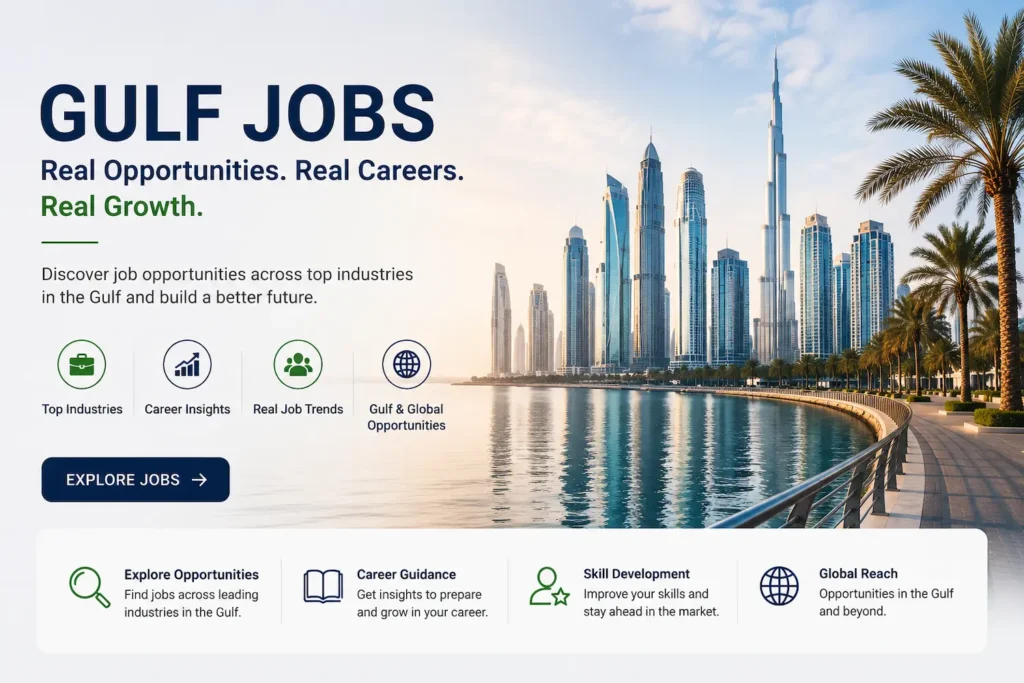
This page provides a career-focused overview of how hiring actually works in the Gulf, including industry trends, selection behavior, and real-world employment conditions.
How Hiring Works in the Gulf Job Market
Job opportunities in the Gulf are influenced by structured hiring cycles rather than continuous recruitment in most industries.
In many cases, recruitment depends on:
- Project launches and infrastructure phases
- Seasonal tourism and travel demand
- Government development initiatives
- Company expansion or restructuring
Because of this, candidates often experience high competition during peak application periods and limited openings during low-demand phases. Understanding timing is often as important as qualifications.
1. Renewable Energy & Sustainability Careers
The Gulf region is investing heavily in clean energy projects, including solar energy systems, hydrogen development, and sustainable city initiatives. These projects are long-term in nature, but hiring is usually concentrated during project development phases. Common roles include:
- Solar Energy Technicians
- Wind Energy Engineers
- Sustainability Analysts
- Environmental Consultants
Candidates with hands-on exposure to large-scale energy systems are often preferred over purely academic profiles. Many applicants are not selected due to lack of field-based or project execution experience.
2. Engineering & Infrastructure Development
Infrastructure development remains one of the strongest employment drivers in the Gulf, supported by government-backed mega projects. However, hiring is typically project-based, meaning demand increases and decreases depending on construction phases. In-demand roles include:
- Civil Engineers
- Project Engineers
- Site Supervisors
- MEP Coordinators
- Planning Engineers
Candidates with proven site experience and project delivery exposure generally have a stronger advantage. Freshers often face longer selection cycles due to limited practical exposure.
3. Human Resources & Recruitment
HR roles are essential across all industries in the Gulf, particularly in companies managing large multicultural workforces. Common roles include:
- HR Officers
- Recruitment Specialists
- Payroll Coordinators
- Talent Acquisition Executives
Selection in HR roles depends heavily on communication skills, organizational ability, and familiarity with corporate systems. Candidates are often filtered out due to weak interview communication or lack of real HR system experience.
4. Real Estate & Property Development
The Gulf real estate sector continues to expand with ongoing residential, commercial, and luxury development projects. Typical roles include:
- Property Consultants
- Leasing Executives
- Real Estate Brokers
- Facility Managers
This sector is highly performance-driven, and competition is strong in client-facing roles. Candidates with strong negotiation skills and market knowledge tend to perform better during selection.
5. Media & Creative Industry
As companies invest more in branding and online presence, demand for creative and content professionals continues to grow across marketing, media, and digital content roles.
Common roles include:
- Graphic Designers
- Video Editors
- Content Writers
- Social Media Specialists
Hiring decisions are strongly portfolio-based. Many candidates are not selected due to lack of real project work or weak visual/content portfolios.
6. Medical & Healthcare Sector
Healthcare remains one of the most stable employment sectors in the Gulf, driven by population growth and continued investment in medical infrastructure. Common roles include:
- Doctors and Specialists
- Registered Nurses
- Pharmacists
- Medical Technicians
This sector is highly regulated, and licensing requirements are mandatory in most cases. Candidates with international clinical experience or recognized certifications generally have better selection chances.
7. Sales, Retail & Consumer Services
Retail and customer service roles remain consistently available due to the Gulf’s strong consumer-driven economy. Typical roles include:
- Sales Associates
- Customer Service Executives
- Store Supervisors
Although entry requirements are lower, competition is extremely high due to large applicant volumes. Candidates with strong communication skills and previous customer interaction experience are more likely to be shortlisted.
8. E-commerce Industry
The rapid growth of online retail has created new opportunities in digital commerce, fulfillment, and e-commerce operations. Common roles include:
- E-commerce Executives
- Product Listing Specialists
- Order Management Staff
Employers often prefer candidates familiar with platforms like Amazon, Shopify, or regional marketplaces.
9. Transport, Logistics & Supply Chain
The Gulf’s strategic geographic position makes logistics one of the most important industries in the region. Common roles include:
- Logistics Coordinators
- Warehouse Supervisors
- Supply Chain Analysts
Hiring is typically demand-driven and often prioritizes candidates with operational experience.
Real Hiring Insights (Important)
Across most Gulf industries, selection is not based only on qualifications. Employers also evaluate:
- Practical experience vs certifications
- Communication and interview performance
- Ability to work in shift-based environments
- Adaptability in multicultural workplaces
In many cases, candidates are not rejected due to lack of education, but due to weak job readiness or incomplete CV presentation.
Seasonal Hiring Behavior (Very Important)
Hiring activity in the Gulf often follows predictable cycles:
| Industry | Peak Hiring Window | Key Reason |
| Aviation | Q2 & Q4 | Summer/Winter Travel Peaks |
| Education | Q2 (April – June) | Pre-Academic Year Prep |
| Hospitality | Q3 & Q4 | Tourism Season & Major Expos |
| E-commerce | Q4 | Holiday & Shopping Festivals |
Applying during these active cycles significantly improves selection chances.
Conclusion
The Gulf job market offers strong opportunities across multiple industries, but success depends on timing, preparation, and understanding how employers actually hire.
Candidates who improve their chances typically:
- Apply during active hiring periods
- Match skills with real job expectations
- Present strong CVs with clear experience
- Verify all opportunities through official employer channels
Understanding hiring behavior is often more valuable than simply applying to multiple listings.