One of the most common questions from first-time Gulf employees isn’t about salary — it’s about what happens when the job ends. UAE labor law includes specific, calculable protections around end-of-service gratuity, notice periods, and leave entitlements. Understanding these before you sign a contract, not after you resign, is what actually protects you.
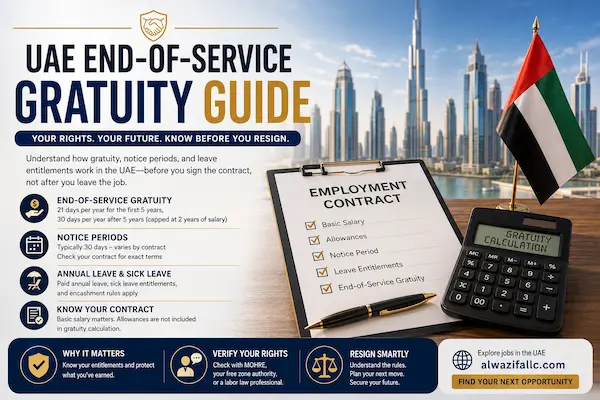
This guide walks through how gratuity is generally structured, what affects your entitlement, and — critically — where to verify the exact rules that apply to your specific contract, since free zone and mainland employment can differ. If you’re still weighing which role or industry to pursue, our guide to the highest-paying careers in Europe is a useful starting point before you get into contract specifics. And if you’re currently exploring roles in the UAE, you can also browse current openings on Alwazifa while you get familiar with your rights as an employee.
What Is End-of-Service Gratuity?
Gratuity is a lump-sum payment private-sector employees in the UAE are generally entitled to after completing at least one year of continuous service. It’s calculated based on basic salary — not total salary including allowances — and length of service.
The general calculation structure:
- 1–5 years of service: 21 days of basic salary for each year worked
- Beyond 5 years: 30 days of basic salary for each additional year
- Cap: total gratuity is generally capped at two years’ worth of total salary
A Worked Example
To make this concrete, here’s how the structure typically plays out (using round numbers for illustration only — always calculate against your actual basic salary):
| Years of Service | Approx. Gratuity Calculation |
|---|---|
| 2 years | 21 days × basic salary × 2 years |
| 5 years | 21 days × basic salary × 5 years |
| 8 years | (21 days × 5 years) + (30 days × 3 years), all × basic salary |
The jump after year 5 is significant — an employee who leaves at year 6 versus year 4 sees the calculation shift entirely for that additional year, not just get a proportional bump. This is one reason it’s worth understanding your exact anniversary date relative to any resignation timing.
The Basic Salary Nuance
This is the detail that trips up the most people: gratuity is calculated on basic salary only. If your contract bundles housing, transport, and other allowances into a single “total salary” figure without clearly separating out a basic salary component, your actual gratuity entitlement can end up meaningfully lower than what your total monthly pay might suggest.
Practical step: before signing any offer, ask HR directly for the basic salary component in writing, separate from allowances. This single question resolves the most common source of gratuity disputes later.
Who Qualifies?
Generally, employees who:
- Have completed a minimum of one year of continuous service
- Are on a standard limited or unlimited private-sector employment contract
Gratuity rules can vary for free zone employees depending on the specific free zone’s regulations. If you’re employed under a free zone authority (DMCC, JAFZA, DIFC, ADGM, and others each have some variation), confirm which framework governs your contract — don’t assume mainland MOHRE rules apply automatically. If you’re still finalizing your visa status, our UAE work visa guide covers how free zone and mainland visas differ, which affects more than just gratuity.
Notice Periods
Standard UAE contracts typically require a notice period — commonly 30 days, though it varies by contract and can be longer for senior roles. A few practical implications worth knowing:
- Resigning without serving the agreed notice period can affect your entitlements.
- In some cases, it can also affect your ability to obtain a new work permit without a waiting period, depending on current MOHRE regulations at the time.
- Notice period terms are contract-specific — always check the actual clause rather than assuming a standard 30-day figure applies to your situation.
Annual Leave Entitlement
Employees who have completed at least one year of service are generally entitled to a minimum number of paid annual leave days per year under UAE labor law, in addition to public holidays. A few things to check in your own contract:
- Some employers offer enhanced leave beyond the legal minimum — check your contract’s actual leave clause.
- Unused leave typically factors into your final settlement calculation when you leave a company, alongside gratuity.
- Leave accrual timing (whether it builds monthly or is granted annually) can affect what you’re owed if you resign partway through a year.
Sick Leave
UAE labor law generally provides for a structured sick leave entitlement per year, typically split between fully paid, partially paid, and unpaid periods depending on the duration of the illness and required medical documentation. Keep documentation from any medical visits — this is usually what determines which pay tier applies.
Resignation vs. Termination: Why It Matters
Entitlements can differ depending on whether employment ends via resignation or termination, and whether termination is for cause. This is one of the more contract-specific areas of UAE labor law. A few situations worth flagging in advance rather than discovering after the fact:
- Termination for cause can affect gratuity eligibility differently than a standard resignation.
- Unlimited vs. limited contract types can carry different notice and entitlement structures.
- Where there’s a genuine dispute, employees should consult MOHRE’s official channels or a labor law professional rather than relying on general assumptions or workplace rumors.
Where to Verify Your Specific Entitlements
Don’t take any single article — including this one — as the final word on your specific situation. Verify against:
- MOHRE (Ministry of Human Resources and Emiratisation) — the primary authority for private-sector mainland labor law questions and dispute resolution.
- Your free zone authority — if you’re employed by a free zone company, confirm which specific regulations apply, since some free zones maintain their own employment frameworks separate from mainland law.
- Your signed employment contract — the specific terms of your individual contract govern many of these details within the bounds of UAE labor law.
Frequently Asked Questions
Does gratuity include housing and transport allowances? No. Gratuity is calculated on basic salary only, which is why it’s important to know your basic salary as a distinct figure, not just your total monthly compensation.
What happens if I resign before completing one year of service? Employees generally don’t qualify for gratuity if they haven’t completed at least one year of continuous service — this is a common reason first-year resignations result in no gratuity payout at all.
Is gratuity the same for free zone and mainland employees? Not necessarily. Free zone authorities can have their own regulations that differ from mainland MOHRE rules, so always confirm which framework applies to your specific contract.
Can my employer deduct anything from my gratuity? This depends on the specifics of your contract and circumstances of departure (for example, unauthorized absence or certain termination-for-cause situations can affect entitlements). This is exactly the kind of question worth confirming with MOHRE or a labor law professional for your individual case rather than assuming a standard answer applies.
Where do I go if my employer disputes my gratuity calculation? MOHRE handles labor disputes for mainland private-sector employees. Free zone employees should start with their free zone authority’s employee relations department.
Final Note
Most disputes over gratuity and end-of-service entitlements come from assumptions made at the time of resignation rather than the time of signing. Reading your contract’s basic salary breakdown, notice period, and leave terms carefully before you accept an offer — and keeping a copy of your signed contract throughout your employment — is the simplest way to avoid confusion later.
If you’re currently job-hunting in the UAE and want to make sure you’re reading offers correctly from the start, explore current listings on Alwazifa and don’t hesitate to ask HR for a clear basic salary breakdown before accepting.
This article is for general informational purposes only and does not constitute legal advice. UAE labor law and free zone regulations are updated periodically — always confirm current rules with MOHRE, your free zone authority, or a qualified labor law professional for your specific situation.